Overlooked Mistakes That the Best Realtor in Santa Clarita, CA Helps Sellers Avoid

December 11, 2025

Selling a home looks simple from the outside, yet the process can surprise even seasoned homeowners, which is why so many turn to the best realtor in Santa Clarita, CA, for guidance. Did you know that eighty-nine percent of home sellers worked with a real estate agent to sell their homes, which was consistent across all age groups? That tells you something. People lean on experts because so many moving parts can go sideways. If you want to sell your home fast and avoid costly missteps, the guidance of the best realtor in Santa Clarita, CA, makes all the difference. Professionals like Racquel Wilder Realty know how to spot trouble long before it reaches your doorstep.


Below are the mistakes many sellers never see coming and how the right agent helps you dodge every one of them.


How the Best Realtor in Santa Clarita, CA Saves Sellers From Pricing Errors That Slow the Sale


Pricing a home is tricky. Go too high, and your listing sits. Go too low, and you leave money on the table. Buyers today compare dozens of listings at once, so they know when something feels off. A top realtor sees trends, buyer behavior, and hidden pricing patterns that the average homeowner may overlook.


Here is how the best realtor in Santa Clarita, CA, or an expert partner like Racquel Wilder Realty protects you from pricing pitfalls:
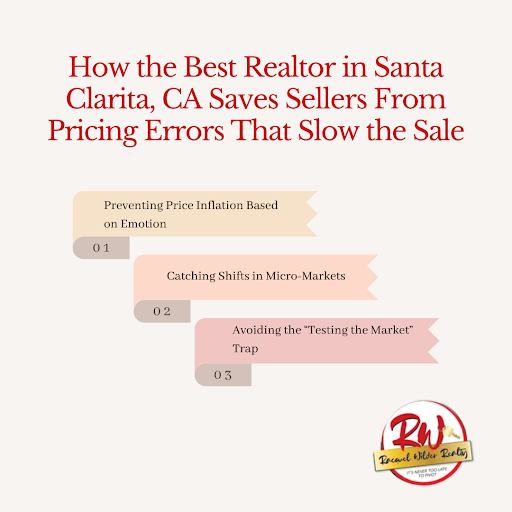
3 pricing mistakes sellers make and how the best realtor in Santa Clarita, CA, helps them with Racquel Wilder Realty logo.

1. Preventing Price Inflation Based on Emotion
It is natural to think your home is worth more because you have memories there. But buyers see square footage, layout, upgrades, and location. An expert takes emotion out of the equation. They show you comparable sales and active competition in plain terms. This helps you list smart, attract real attention, and sell your home fast without endless price cuts later.


2. Catching Shifts in Micro-Markets
Some neighborhoods peak early. Others rise slowly. Prices can jump or stall for reasons most sellers never notice. A top realtor in Santa Clarita, CA, studies local data every day. They know which streets command higher offers, how school district changes affect values, and what buyers in your area truly want.


3. Avoiding the “Testing the Market” Trap
Some sellers price high just to see what happens. The problem? A stale listing signals weakness. You risk losing your strongest buyers in week one. Your agent guides you toward a number that sparks action from the start. The goal is a steady flow of qualified buyers rather than a long, quiet wait.


A skilled real estate agent also explains when to adjust pricing, how many days on market is normal, and what buyer feedback actually means. Professionals like Racquel Wilder Realty help you stay calm, clear, and confident.


How a Relocation Specialist in Santa Clarita, CA, Guides Out-of-Area Sellers Through Hidden Market Traps


Selling from afar is a whole different challenge. If you are moving out of state or juggling a tight timeline, you need someone who understands relocation inside and out. This is exactly why so many people rely on a relocation specialist in Santa Clarita, CA, when they need a trusted partner to handle the complexities.


1. Managing Property Prep When You Cannot Be There
A relocation specialist in Santa Clarita, CA, coordinates repairs, cleaning, staging, photography, and inspections on your behalf. They have local contacts for every task, so you do not waste hours searching online or hiring the wrong people. You get a smooth process even when you are miles away.


2. Navigating Regional Buyer Expectations
Buyer preferences shift from one city to another. What attracts buyers in Santa Clarita might not matter in another market. A
relocation specialist in Santa Clarita, CA, knows what local shoppers expect. They guide you through necessary upgrades and help you avoid spending money on improvements that will not boost your offers.


3. Avoiding Legal or Contract Mistakes
Different counties and states have their own rules. Forgetting a disclosure or missing a filing deadline can derail your sale. Your relocation expert keeps everything compliant and on track. That peace of mind alone is priceless when you are already focused on settling into a new area.


Agents like Racquel Wilder Realty combine market knowledge with relocation support, making the process feel far less overwhelming.


What the Best Realtor in Santa Clarita, CA Teaches Homeowners About Timing, Prep, and Buyer Behavior


Selling a home is about more than a clean listing and a strong price. Timing, presentation, and buyer psychology all play major roles. A top realtor helps you understand how each part works so you can make smart decisions.


1. Understanding Seasonal Buyer Energy
Every market has high and low seasons. Some months deliver motivated buyers. Others bring browsers who are in no rush. Your agent helps you choose a listing date that strengthens your chances of a faster, higher offer. Even a few weeks of timing can change your final price.


2. Preparing the Home Without Overspending
Do you need new floors? Should you repaint? What about landscaping? Most sellers guess, and guess wrong. The
best realtor in Santa Clarita, CA, keeps your prep focused. They identify which updates raise perceived value and which ones buyers do not care about. This keeps your budget tight and your results sharp.


3. Reading Buyer Behavior
Some buyers fall in love instantly. Others nitpick everything. Your agent helps you understand which comments matter and which ones are typical buyer banter. They explain why some buyers walk after a showing and why others return with strong offers. Knowing what is normal protects you from unnecessary stress.


4. Negotiating With Confidence
Negotiation is not just numbers. It is strategy. Your agent spots weak offers, recognizes serious buyers, and knows when to push or when to settle. With Racquel Wilder Realty on your side, you get an advocate who approaches negotiation with skill and clarity, not guesswork.


Avoiding Mistakes Is Easier With the Right Expert


A great agent does more than list a home. They steer you around problems you never knew existed. They shorten your timeline, strengthen your offers, and clear away confusion. Whether you need the relocation specialist in Santa Clarita, CA, your results improve when you work with someone who knows the terrain.


Racquel Wilder Realty helps sellers stay organized, informed, and confident at every stage. With a trusted expert, you gain a smoother path, fewer surprises, and a stronger finish.


Selling a home comes with plenty of hidden traps, but with the right guidance, you can move through the process with clarity. The best agents help you price correctly, prepare strategically, and negotiate effectively. If you want to sell your home fast and protect your equity, connect with a professional who understands the market inside and out.


Sixty-six percent of recent sellers used an agent that was referred to them or used an agent they had worked with in the past to buy or sell a home. That says a lot about the power of trust. If you want that same level of confidence, reach out to Racquel Wilder, the best realtor in Santa Clarita, CA, and take the next step today.
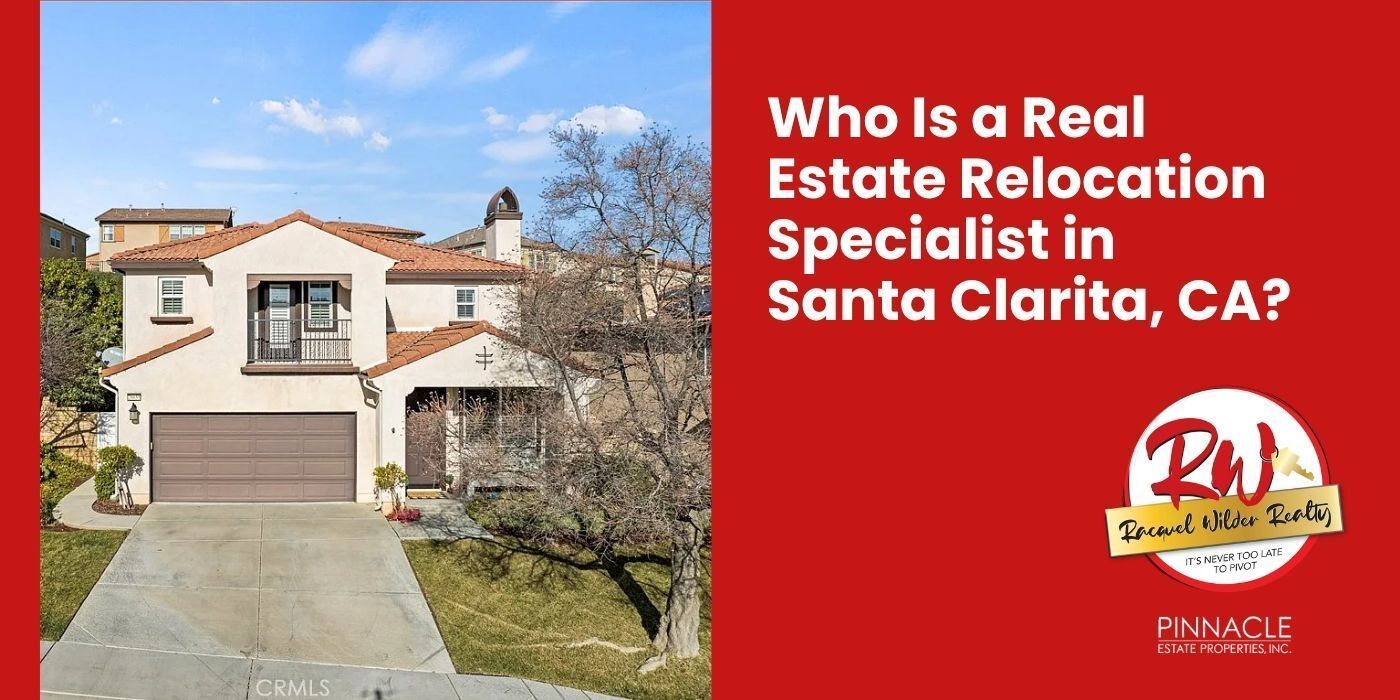
Two-story beige house with brown roof and garage, blue sky, and a real estate logo.
November 19, 2025
Discover how a trusted realtor in Santa Clarita, CA like Racquel Wilder Realty can help homeowners sell home fast. Contact Racquel Wilder Realty today!
September 12, 2025
Waiting for the perfect buyer to fall in love with your house? In today’s market, that’s usually not what’s holding things up. And here’s why. Let’s be real. Homes are taking a week longer to sell than they did a year ago. According to Realtor.com : “Homes are also taking longer to sell. The typical home spent 60 days on the market in August, seven days longer than last year and now above pre-pandemic norms for the second consecutive month. This was the 17th straight month of year-over-year increases in time on market.” Part of that is because there are more homes on the market. So, with more options for buyers to choose from, they aren’t getting snatched up quite as fast. But there’s another big reason: price. The Average List Price Isn’t Going Up – and That Matters Today, a lot of homeowners are overshooting their list price. They remember the big climb in home prices a few years ago, and they don’t realize how much has changed. One of the most important, but often overlooked, changes in today’s housing market is this: average list prices have held steady for the past few years. That’s a big shift from a typical market, where prices were rising steadily each year. And it’s significantly different than the 2021-2022 surge when sellers could set their price just about anywhere and still attract multiple offers over asking. But now? That trend has leveled off – and sellers who want to stay competitive need to take note ( see graph below ): 
September 2, 2025
You may have seen talk online that new home inventory is at its highest level since the crash. And if you lived through the crash back in 2008, seeing new construction is up again may feel a little scary. But here’s what you need to remember: a lot of what you see online is designed to get clicks. So, you may not be getting the full story. A closer look at the data and a little expert insight can change your perspective completely. Why This Isn’t Like 2008 While it’s true the number of new homes on the market hit its highest level since the crash, that’s not a reason to worry. That’s because new builds are just one piece of the puzzle. They don’t tell the full story of what’s happening today. To get the real picture of how much inventory we have and how it compares to the surplus we saw back then, you’ve got to look at both new homes and existing homes (homes that were lived in by a previous owner). When you combine those two numbers , it’s clear overall supply looks very different today than it did around the crash ( see graph below ):
August 25, 2025
If you tried to buy a home a few years ago, you probably still remember the frenzy. Homes were listed one day and gone the next. Sometimes it only took hours. You had to drop everything to go and see the house, and if you hesitated even slightly , someone else swooped in and bought it – sometimes even sight unseen. That kind of intensity pushed a lot of buyers to the sidelines. It was stressful, chaotic, and for many, really discouraging. But here’s what you need to know: those days are behind us. Today’s market is moving slower, in the best possible way. And that’s creating more opportunity for buyers who felt shut out in recent years. The Stat That Changes Everything According to the latest data , homes are spending an average of 58 days on the market . That’s much more normal. And it’s a big improvement compared to the height of the pandemic, when homes were flying off the shelves in a matter of days ( see graph below) : 
July 14, 2025
Buying your first home is a big milestone – and the right support is going to make it a whole lot easier. Because while this process might be brand new to you, it’s not new to your agent. They’ve helped plenty of first-time buyers through it. They know what works, what actually matters, and how you can move through the process with a lot less guesswork. Here are a few real-world tips based on that experience of helping other first-time buyers. Tip #1: Get Pre-Approved First Rocket Mortgage says this is one of the most common mistakes first-time buyers make. And it’s easy to see why. Looking at homes online is fun. But doing it before you know your numbers? That’s risky. You don’t want to fall in love with a house that’s way outside of your financial comfort zone. That's a fast track for getting frustrated. Instead, find your agent and talk to a lender early – before looking at any houses . With your lender’s help, you’ll be able to get pre-approved for your home loan. That’ll give you a better idea of what you’ll be able to borrow. And it helps you set a realistic budget. Then, your agent will be able to make you a customized list of homes, so you’re only seeing what’ll work for what you can spend. More clarity, less frustration. Tip #2: Set a Budget and Stick To It Remember, just because you can borrow up to a certain amount, chances are you won’t want to max that number out. It’s really important to avoid overextending your budget, especially in today’s market. Other housing expenses like home insurance , homeowners association ( HOA ) fees, and taxes are on the rise, and you need to factor those in. Bankrate offers this advice: “When you’re building a budget to narrow your search for properties, don’t just think about how much house you can afford, but how much in recurring costs you can handle once you’ve purchased your home.” So, lean on the pros for advice on expenses you may not be thinking of, so you can work them into your budget. Tip #3: Don't Skip the Inspection When you find the right home, it’s easy to get caught up in the excitement. But skipping the inspection just to make your offer look stronger is a gamble that could cost you. Instead, work with your agent to schedule a real inspection. They'll connect you with local pros, make sure it’s booked, and help you understand the results so you can negotiate repairs or ask for money off at closing, if needed. It’s better to invest in this time up front to avoid what could be thousands in surprise repairs later. Tip #4: Your First Home Doesn’t Have To Be Your Forever Home For a lot of buyers, this is where unnecessary pressure creeps in. But remember, you don't have to land your dream home right out of the gate. That’s why it’s called a starter home. It's a starting point, not your final destination. An agent will help you explore all your options, including ones you may not have thought about. For example, a well-kept condo, a townhouse in a great location, or a house with good bones can be a perfect first step into homeownership. The goal? Get in. Start building equity . Then, grow from there. Bottom Line Buying your first place is a big step, but it doesn’t have to feel like a step in the dark. Let’s talk about where you’re starting, what’s stressing you out (or holding you back), and what you actually need to know to make it happen. What’s one question you wish you could ask an expert right now?
By Racquel Wilder May 28, 2025
If you're a first-time homebuyer, chances are you'll come across some terms you’re not familiar with. And that can be overwhelming, especially while going through one of the biggest purchases of your life. The good news is you don’t need to be an expert on real estate jargon. That’s your agent’s job. But getting to know these basic terms will help you feel a lot more confident throughout the process. Terms Every Homebuyer Should Know Once you’re familiar with this terminology, you’ll have a better understanding of important details – from contracts to negotiations. So, when those big conversations happen, you’ll feel informed, in control, and able to make the best decision for your unique situation. As Redfin puts it: “Having a basic understanding of important real estate concepts before you start the homebuying process will give you peace of mind now and could save you a fortune in the future.” Here’s a breakdown of a few key real estate terms and definitions you should know, according to the Federal Trade Commission (FTC) and First American. Appraisal: A report providing the estimated value of the home. Lenders rely on appraisals to determine a home’s value, so they’re not lending more than it’s worth. Contingencies: Contract conditions that must be met, typically within a certain timeframe or by a specified date. For example, a home inspection is a common contingency. While you can waive these to try and make your offer more competitive, it’s generally not recommended. Closing Costs: A collection of fees and payments made to the various parties involved in your home purchase. Ask your lender for a list of closing cost items, including attorney’s fees, taxes, title insurance, and more. Down Payment: This varies by buyer, but is typically 3.5-20% of the purchase price of the home. There are even some 0% down programs available. Ask your lender for more information. Chances are, unless specified by your loan type of lender, you don’t need to put 20% down. Escalation Clause: This is typically used in highly competitive markets. It’s an optional add on in a real estate contract that says a potential buyer is willing to raise their offer on a home if the seller receives a higher competing offer. The clause also includes how much a buyer is willing to pay over the highest offer. Mortgage Rate: The interest rate you pay when you borrow money to buy a home. Consult a lender so you know how it can impact your monthly mortgage payment. Pre-Approval Letter: A letter from a lender that shows what they’re willing to lend you for your home loan. This, plus an understanding of your savings, can help you decide on your target price range. Getting this from a lender should be one of your first steps in the homebuying process, before you even start browsing homes online. Bottom Line You don't need to have all these terms memorized, but a little knowledge goes a long way. Brushing up on the basics now means fewer surprises later – and more clarity when you buy a home. What unfamiliar real estate term or phrase have you come across that wasn’t on this list? Let’s connect and talk through it so you have a solid understanding of what it means and where it may show up in the homebuying process.
By Racquel Wilder May 28, 2025
A few years ago, homes were flying off the shelves and getting multiple offers well over their asking price. It felt like you could name your price and still have buyers lined up at the door. But today’s housing market is different. Buyers are getting more selective now that inventory has grown. Homes are sitting a little longer. And more sellers are having to cut their prices. So, how do you still come out on top? It all starts with one thing, pricing your house right from the start. Today, that matters more than ever – and it can make or break your sale. There’s a Real Price Disconnect Between Buyers and Sellers A recent survey from Realtor.com shows 81% of home sellers believe they’ll get their asking price or more. But the actual sales data shows there’s a growing gap between what sellers expect and what buyers are actually willing to pay. In fact, an annual report from the National Association of Realtors (NAR) shows 44% of recently sold homes went for less than the asking price. And 1 in 3 sellers had to cut their price at least once before the home sold. It’s a sign that expectations may be a little out of step with today’s reality. Check out the graph below. It uses data from Redfin to show that asking prices ( blue line ) are higher than actual sales prices ( green line ) by a wider and wider margin:
By Racquel Wilder May 22, 2025
If you’ve been house hunting lately, you’ve probably felt the sting of today’s mortgage rates. And it’s because of those rates and rising home prices that many homebuyers are starting to explore other types of loans to make the numbers work. And one option that’s gaining popularity? Adjustable-rate mortgages (ARMs). If you remember the crash in 2008, this may bring up some concerns. But don’t worry. Today’s ARMs aren’t the same. Here’s why. Back then, some buyers were given loans they couldn’t afford after the rates adjusted. But now, lenders are more cautious, and they evaluate whether you could still afford the loan if your rate increases. So, don’t assume the return of ARMs means another crash. Right now, it just shows some buyers are looking for creative solutions when affordability is tough. You can see the recent trend in this data from the Mortgage Bankers Association (MBA). More people are opting for ARMs right now ( see graph below ): 
By Racquel Wilder May 13, 2025
From rising home prices to mortgage rate swings, the housing market has left a lot of people wondering what’s next – and whether now is really the right time to move. There is one place you can turn to for answers you want the most. And that’s the experts. Leading housing experts are starting to release their projections for the rest of the year. These insights will give you clarity – and a little more optimism than you might expect. Business Insider sums up the forecasts (and why they’re good news for you): “As mortgage rates go down this year, affordability may improve slightly for homebuyers. Inventory is also expected to grow, which should help moderate price growth and make finding a home easier.” Let’s break it down. 1. Mortgage Rates Should Come Down (Slightly) While a major drop isn’t on the table, forecasters are calling for a modest decline in rates in the months ahead as the economic outlook becomes more certain. Based on the information we have right now, here’s a look at where they say rates should be by year-end (see graph below):
By Racquel Wilder May 13, 2025
Whether you’re planning to move soon or not, it’s smart to be strategic about which home projects you take on. Your time, energy, and money matter – and not all upgrades offer the payoff you might expect. As U.S. News Real Estate explains: ". . . not every home renovation project will increase the resale value of a home. Before you invest in a swimming pool or new addition, you should consider whether the project will pay itself off by getting prospective buyers in the door when it’s time to sell. " That’s why, before you pick up a power tool or call a contractor, your first step should be talking to a local agent. Planning Ahead Pays Off If you plan to move relatively soon, you’ll want to get a jump start on your to-do list. And even if moving isn’t on your radar yet, life can change quickly – and a new job, a growing family, or shifting priorities can fast-track your plans. You don’t want to be scrambling to fix up your home if your timeline changes. Smart updates now = fewer headaches later. By planning ahead, you can spread out the work over time, which is easier on your wallet and your stress levels. Plus, you’ll get to enjoy the upgrades while you’re still living there and have the peace of mind your house is ready to impress when it's time to list. What Buyers Want (and What’s Actually Worth Doing) If you’re not sure which projects are worth your time and money – here's some information that can help. A study from the National Association of Realtors (NAR) shows which upgrades typically offer the best return on your investment (ROI) (see graph below):